Reclaiming India’s Forgotten Legacy in Carnival Glass
How archival research, pattern attribution, and collector scholarship helped reposition Indian Carnival Glass within the international history of Collectible glass.
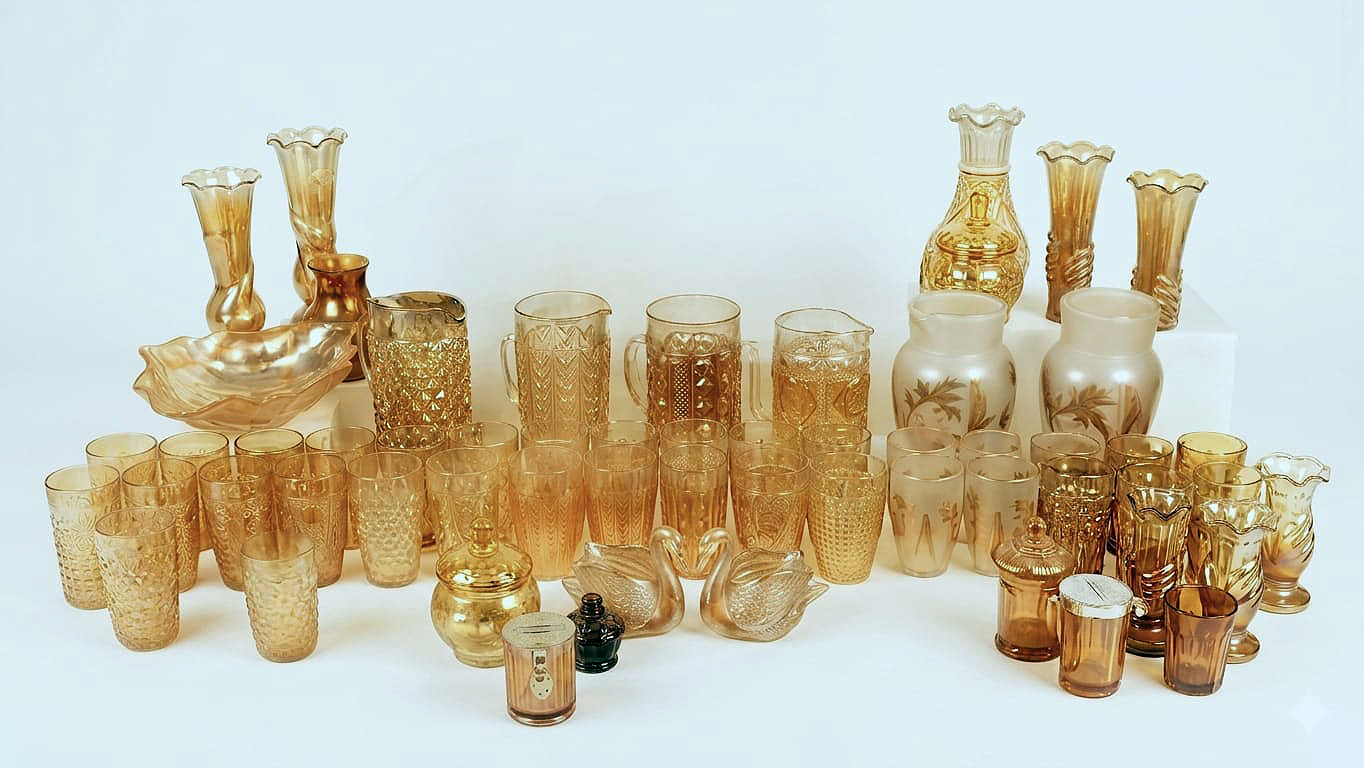
For much of the twentieth century, the international historiography of Carnival Glass remained overwhelmingly centred upon American and European production. Standard reference literature, collector scholarship, auction catalogues, and museum discourse focused primarily on manufacturers such as Fenton, Northwood, Imperial, Dugan, Millersburg, Brockwitz, Inwald, Riihimäki, and Crown Crystal, while the contribution of India to the history of iridized pressed glass remained largely overlooked.
This omission was not due to the absence of a glassmaking tradition in India. On the contrary, India possessed one of the most active and commercially significant glass industries in Asia during the early and mid-twentieth century. However, unlike Western manufacturers whose archives, catalogues, trademarks, and production records survived in organised institutional frameworks, Indian glass production remained poorly documented. As a result, many Indian iridized objects circulating in international collections were either misattributed to European manufacturers or remained categorised as “unknown.”
Within this neglected field of study, the contribution of Vikram Bachhawat occupies a significant place. Through archival investigation, factory tracing, pattern identification, nomenclature research, and sustained collaboration with leading international authorities, Bachhawat played an important role in establishing Indian Carnival Glass as a recognised area within global Collectible glass scholarship.
Indian Carnival Glass and the Problem of Historical Visibility
The industrialisation of glassmaking in India accelerated during the early twentieth century, particularly in and around Firozabad, Uttar Pradesh, which emerged as the country’s principal centre of glass production. According to research published by Carnival Glass Worldwide, industrial growth in the Indian glass sector expanded considerably between the two World Wars due to government support, railway connectivity, coal access, and increased domestic demand. (carnivalglassworldwide.com)
Among the major Indian producers was Jain Glass Works, founded in 1928, which began manufacturing iridized “Lustre Glass” around 1935. Over time, Jain developed a distinctive range of Carnival Glass forms including tumblers, water sets, figural vases, bowls, and Collectible wares characterised by strong marigold iridescence and richly moulded ornamentation. (carnivalglassworldwide.com)
Despite this industrial activity, Indian Carnival Glass remained marginal within mainstream international scholarship for decades. Many patterns and figural objects were routinely catalogued under European attributions, particularly as Bohemian or Czechoslovakian glass, due to stylistic similarities and the absence of reliable factory documentation from India.
International Recognition in Standard Reference Literature
A major shift in the scholarly understanding of 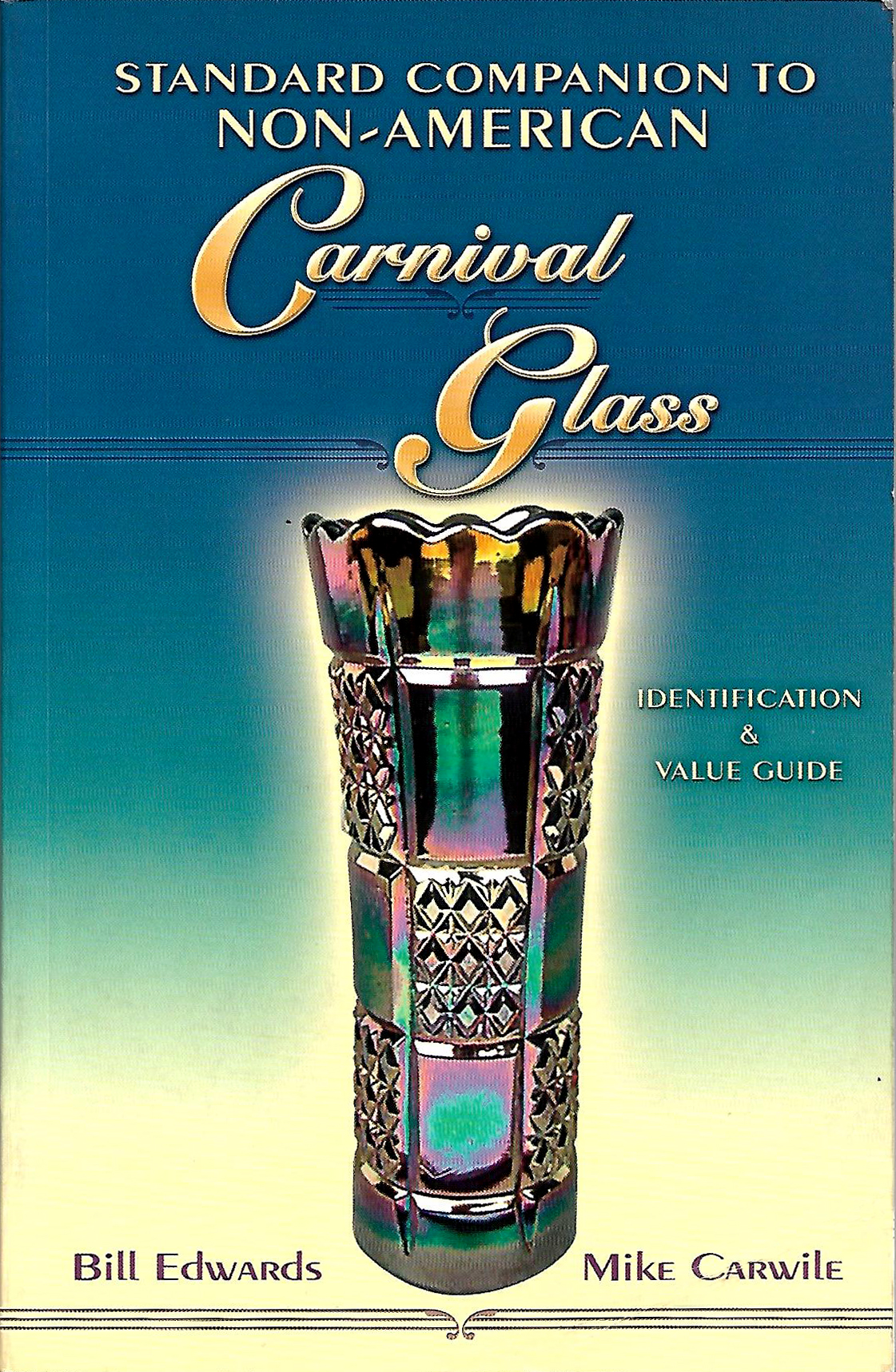 Indian Carnival Glass emerged through the publication of Standard Companion to Non-American Carnival Glass.
In the section devoted to India, the authors explicitly acknowledged the role of Vikram Bachhawat in expanding international knowledge regarding Indian glass production:
“through long correspondence with Vikram Bachhawat, we’ve learned there were indeed more than 20 glassmakers in India following World War II.”
This statement carries considerable historiographical significance. Prior to this phase of collaborative research, international collector literature had largely restricted Indian Carnival Glass production to Jain Glass Works alone. The correspondence and research contributions of Bachhawat helped demonstrate the existence of a far broader industrial ecosystem involving numerous Indian manufacturers including:
• Paliwal Glass Works,
• Agarwal Glass Works,
• AVM,
• CB Works,
• and several additional regional producers.
The publication thereby transformed the narrative surrounding Indian Carnival Glass from one of isolated production to that of a substantial and diverse manufacturing network.
Pattern Identification and Nomenclature Research
The significance of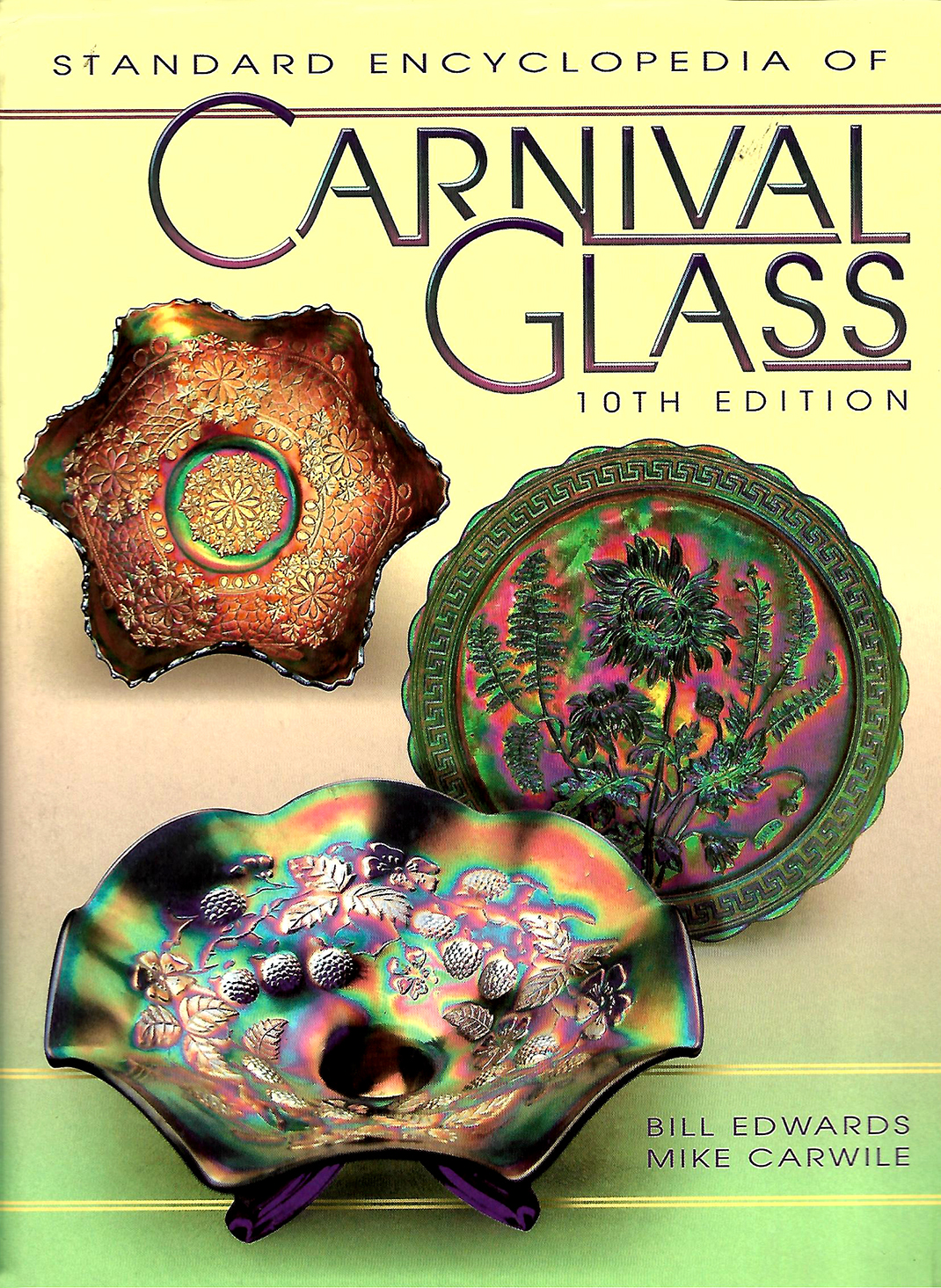 Bachhawat’s contribution becomes even more apparent through the repeated references to him in Standard Encyclopedia of Carnival Glass (10th Edition).
Across multiple entries, the encyclopedia credits him for:
• identifying Indian patterns,
• establishing nomenclature,
• sharing photographic documentation,
• decoding factory initials,
• and assisting with attributional research.
Several examples are particularly noteworthy.
Aman
The encyclopedia records:
“Aman is from India, and was named by Vikram Bachhawat…”
This acknowledgement is academically important because nomenclature forms one of the central mechanisms through which Carnival Glass scholarship constructs taxonomies and comparative pattern studies.
Calcutta Rose
The encyclopedia further states:
“Vikram Bachhawat tells us this is the correct name for this beautiful Indian tumbler.”
Again, this demonstrates direct involvement in the classification and naming of Indian patterns.
Circled Star and Vines
Another entry notes:
“Marked ‘PGW’ (Vikram Bachhawat tells us this means Paliwal Glass Works)…”
This reference is particularly important because it highlights Bachhawat’s contribution toward decoding factory initials and reconstructing industrial provenance.
Angoori
The encyclopedia also records:
“Vikram tells us this probably stands for Agarwal Glass Works.”
Diamond and Bows
Elsewhere, the authors acknowledge: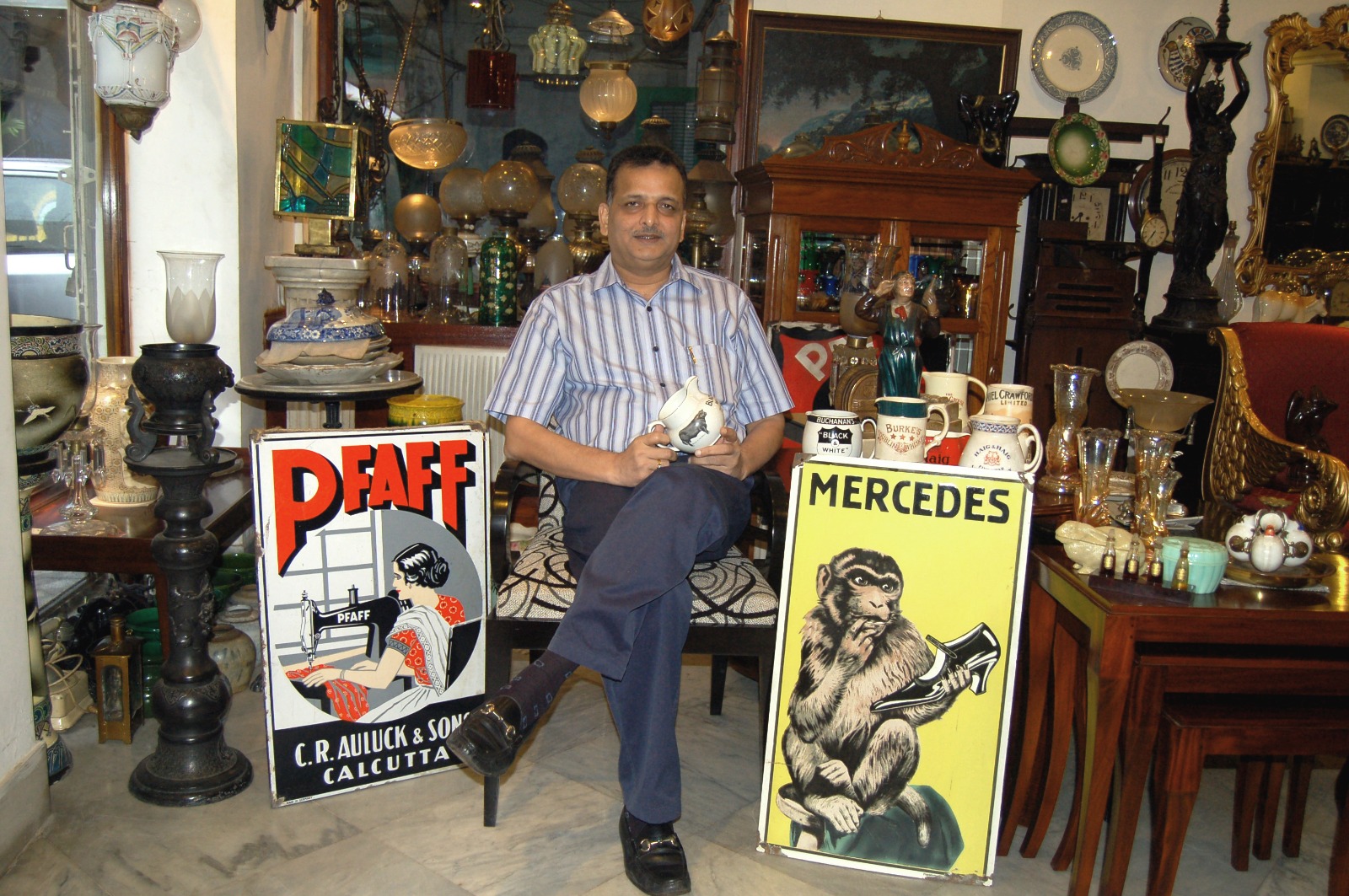
“We thank Vikram Bachhawat for sharing it with us.”
Collectively, these references establish that Bachhawat’s role extended well beyond that of a private collector. His research materially contributed to the vocabulary, attributional structure, and industrial mapping framework through which Indian Carnival Glass is now studied internationally.
Collaboration with International Carnival Glass Authorities
Further independent recognition appears through Carnival Glass Worldwide, widely regarded as one of the most authoritative international research platforms dedicated to Carnival Glass scholarship.
In their landmark essay:
“Carnival Glass from India – The Story Behind the Glass”
Glen and Stephen Thistlewood wrote: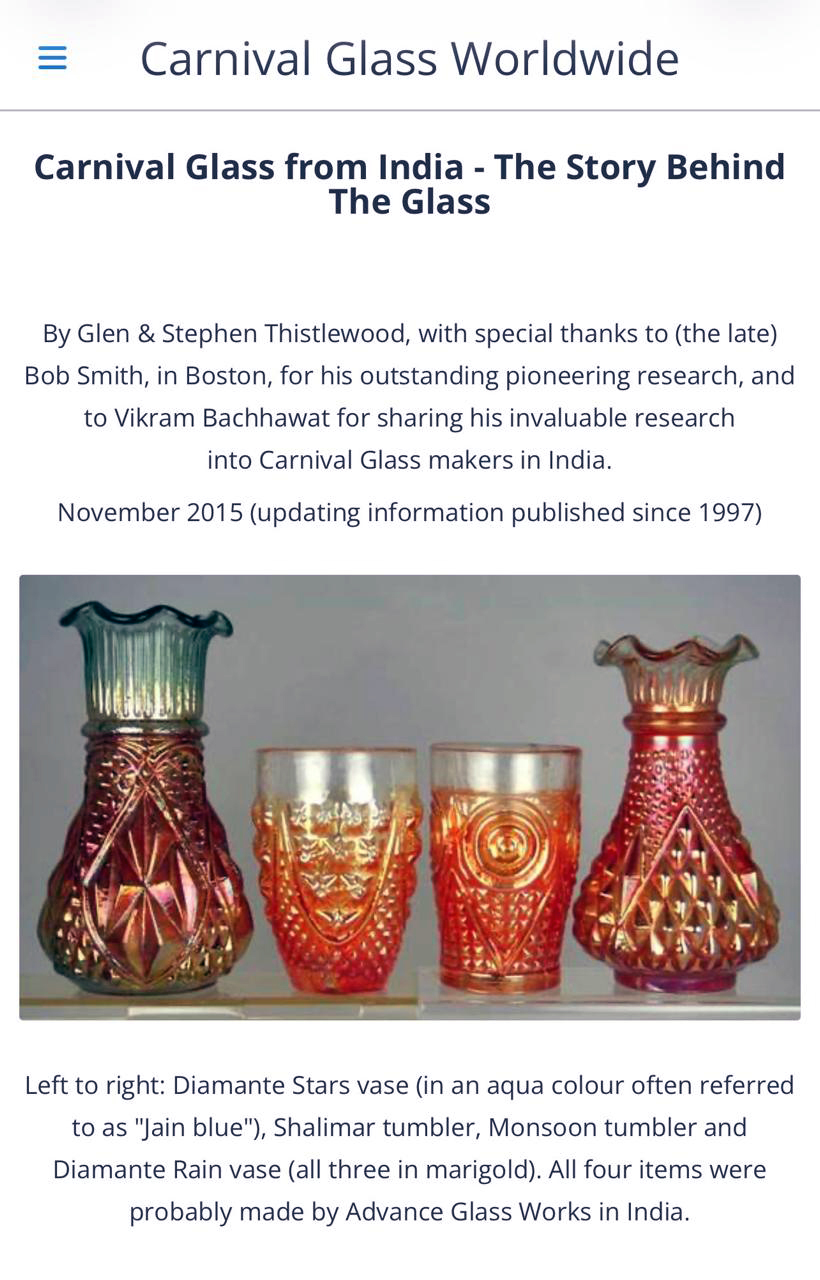
“Subsequently, we were contacted by Vikram Bachhawat who provided further invaluable information and his research into Carnival Glass made in India.” (carnivalglassworldwide.com)
Elsewhere, the website explicitly acknowledges:
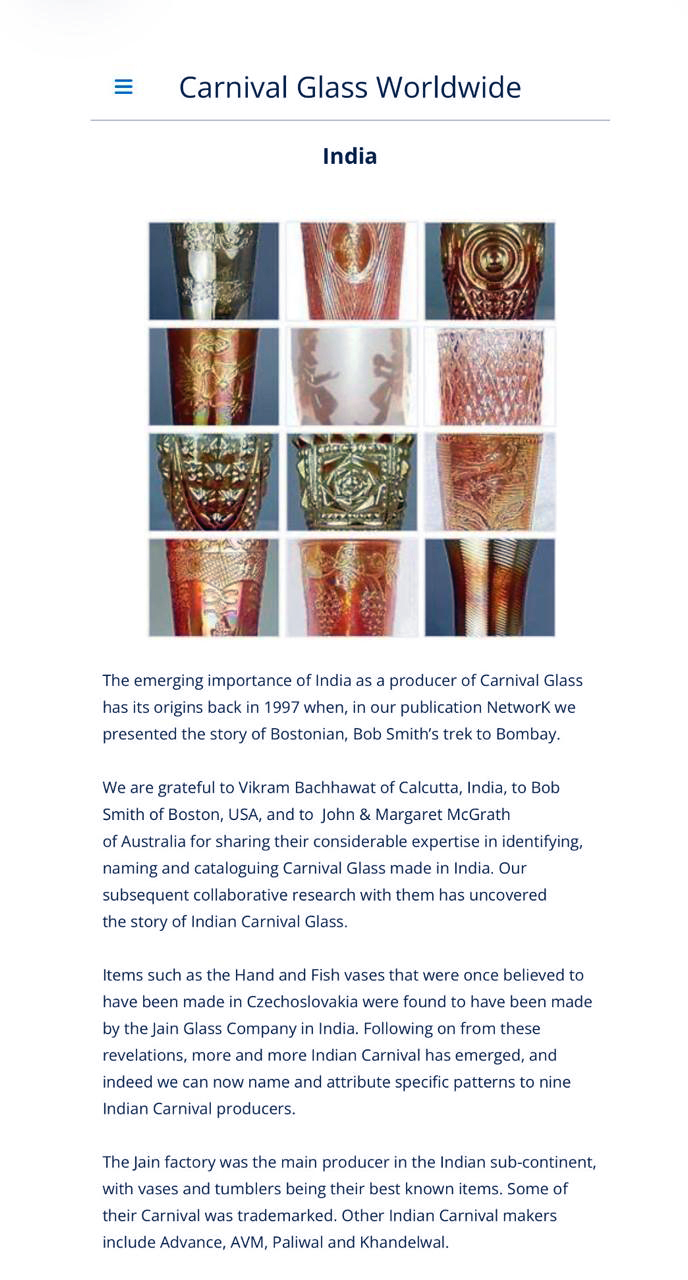
“We are grateful to Vikram Bachhawat of Calcutta, India… for sharing their considerable expertise in identifying, naming and cataloguing Carnival Glass made in India.” (carnivalglassworldwide.com)
This collaborative scholarship contributed toward:
• identifying more than fifty Indian Carnival Glass patterns,
• attributing patterns to at least nine Indian manufacturers,
• and integrating Indian production into mainstream international Carnival Glass discourse. (carnivalglassworldwide.com)
Correcting Longstanding Misattributions
One of the most important scholarly outcomes of this research involved the correction of longstanding attributional errors.
Several Indian figural forms — particularly:
• Hand Vases,
• Fish Vases,
• and Elephant Vases —
had circulated internationally for decades under Czechoslovakian or Bohemian attributions.
 However, subsequent research established that many of these objects were actually manufactured in India, particularly by Jain Glass Works.
Carnival Glass Worldwide notes:
“Items such as the Hand and Fish vases that were once believed to have been made in Czechoslovakia were found to have been made by the Jain Glass Company in India.” (carnivalglassworldwide.com)
This represented an important revision within Carnival glass historiography and contributed toward restoring Indian manufacturers to the international narrative of iridized pressed glass production.
Beyond Collecting: Collectible Glass Scholarship and Material Heritage
Vikram Bachhawat began collecting Carnival Glass and Collectibles at an early age. Over time, his research into Indian factories, pattern systems, and industrial histories attracted the attention of leading international scholars and collector communities. 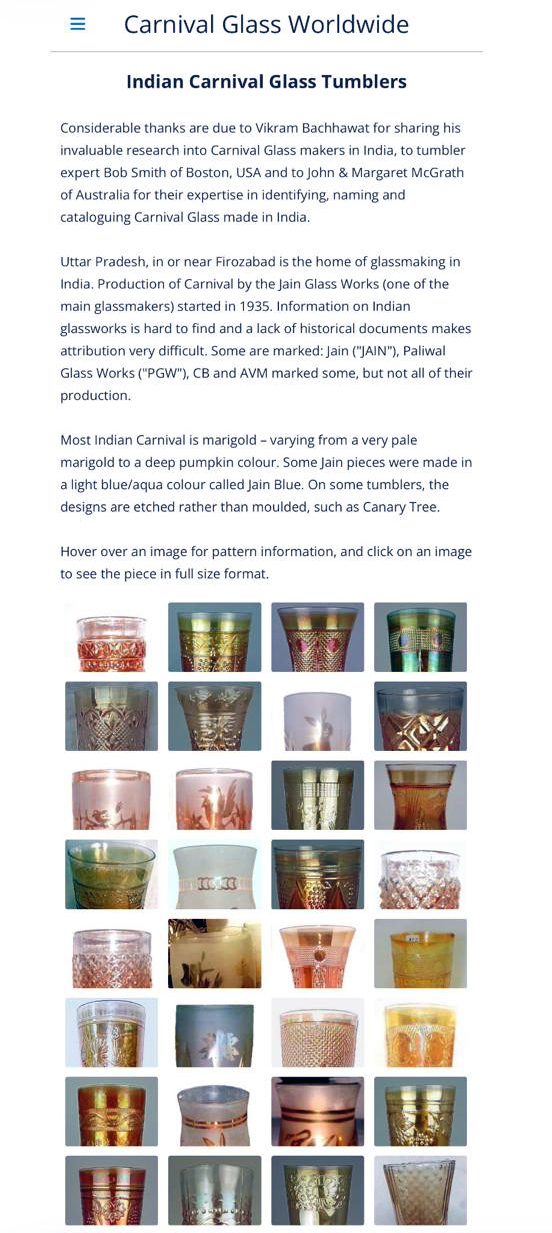
The broader significance of this contribution lies not merely in the accumulation of rare objects, but in the preservation of a neglected chapter of Indian industrial and Collectible glass history.
Through archival reconstruction, pattern documentation, and international collaboration, Bachhawat contributed toward restoring this overlooked material heritage to scholarly visibility.
An important aspect of this contribution is its historical timing. Much of Vikram Bachhawat’s research, correspondence, pattern identification, and collaboration with international Carnival Glass authorities took place more than two decades ago, primarily between 2002 and 2006 — a period when information on Indian Carnival Glass was extremely limited and digital archival resources were still in their infancy. Long before online databases and social media collector forums became widespread, Bachhawat was independently documenting Indian patterns, tracing factory histories, decoding mould markings, and sharing primary visual references with leading international scholars such as Mike Carwile, Bill Edwards, and Glen & Stephen Thistlewood. The subsequent inclusion of his research and collection references in major international encyclopaedias and scholarly platforms therefore represents one of the earliest documented instances of an Indian researcher contributing directly to the global historiography of Carnival Glass. The rediscovery of Indian Carnival Glass represents one of the more significant corrective developments in modern Collectible glass scholarship.
Through research, nomenclature studies, attributional analysis, industrial mapping, and collaboration with international authorities, Vikram Bachhawat helped reposition India within the global historiography of Carnival Glass production.
Today, Indian Carnival Glass is increasingly recognised among collectors, scholars, and Collectible glass researchers worldwide. Much of this renewed visibility owes itself to the pioneering work of dedicated collectors who challenged long-standing assumptions regarding the geography and history of Carnival Glass manufacture.
Among those contributors, Vikram Bachhawat occupies a notable place in the evolving scholarship surrounding Indian iridized glass and the broader history of global Collectibles.
Most read articles
A Star Amongst Too Many: Chandra Bhattacharjee at Birla Academy of Art & Culture
Chittaprosad Bhattacharya: Art as Witness, Image as Resistance
The Resurgence of the Indian Art Market

Ramkinkar Baij’s Bronze Sculptures: A Modernist Legacy in Form and Vitality.
Mid-Market Contemporary Artists of Asia